 NexGPU-算力租赁,GPU服务器,GPU云算力,AI服务器租用-新闻博客
Mid-July Data: Same Card, Nearly 3x Price Difference
Last week, fresh numbers surfaced online, directly hitting the pain points of many small and medium teams. Someone programmatically scraped quotes from several channels like Azure, RunPod, and Vast, collecting 1,417 observations in a single day on July 4th. The H100 row was the most striking: the lowest was $1.33/hour, the highest $3.85, with a median of $2.59—a 2.9x difference on the same card the same day. H200 was even more extreme, ranging from $0.50 to $4.39, an 8.8x spread. B200, due to scarce supply, had the narrowest range.
These aren't abstract reports. Differences stem from term (on-demand vs. one-year commitment), interconnect (SXM+IB vs. PCIe+Ethernet), bundled storage, regional compliance, and whether the counterparty is a major cloud with SLA or a single-machine host. Around mid-July, some noted that big players could quote H100 per-card at $11 levels, while specialized channels pressed down around $2, with clear logo and ecosystem premiums. RAM shortages and HBM capacity contention persist. Blackwell instances like Google A4 B200 have reached GA, but they start at 8 cards, have limited regions, and commitment discounts are hard to secure, amplifying the selection difficulty.
Our team hit this exact problem. A mid-size project fine-tuning multi-turn agents originally planned to run two weeks of intensive experiments on 8x H100, budgeting based on “market average,” but things went haywire immediately.
How the Problems Unfolded Step by Step
Two days before project kickoff, everyone went bargain-hunting in the market. First, we locked in an H100 node at just over $1.40, thinking the specs matched, and placed the order. But the script crashed immediately—distributed training hit communication timeouts. On closer inspection, it was PCIe + standard Ethernet; NVLink bandwidth and IB were far too weak, so multi-card AllReduce couldn't even start.
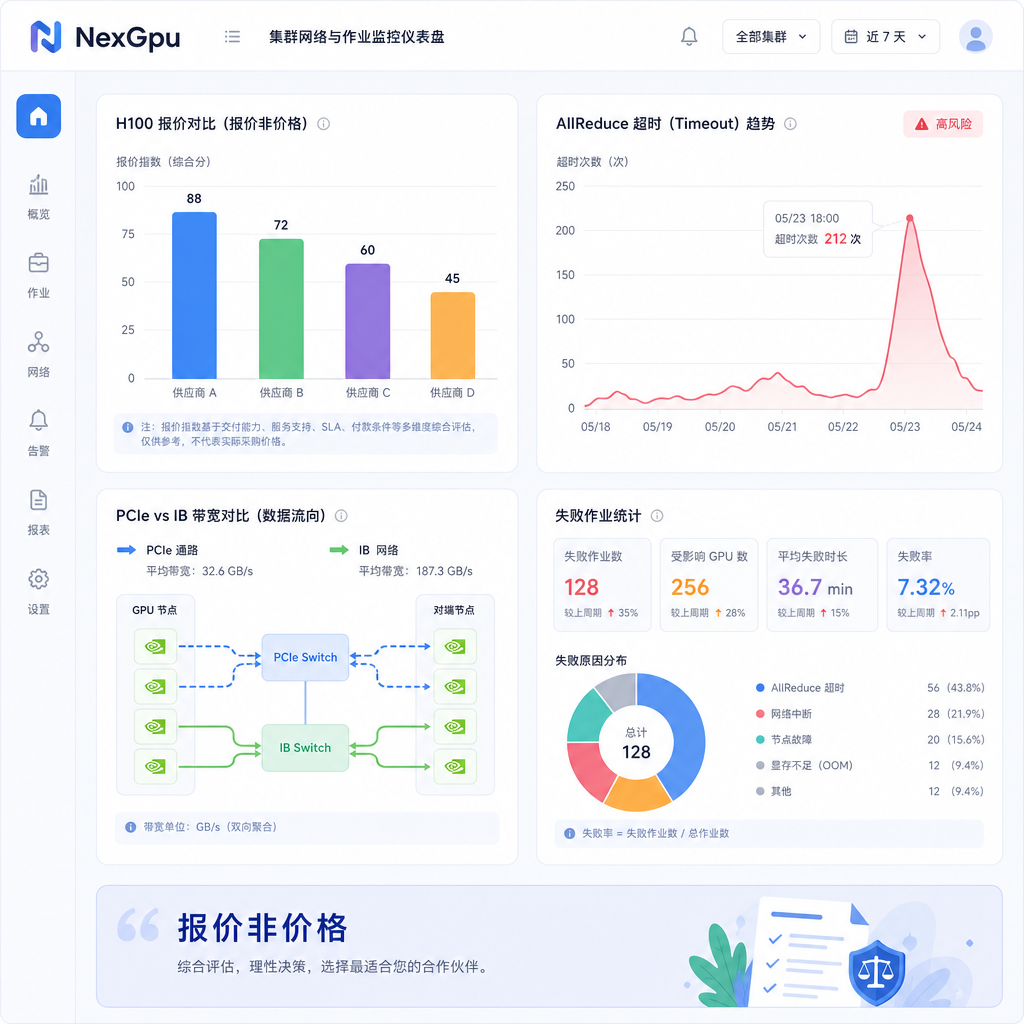
We switched to a “reputable” mid-priced option around $3, but storage was billed separately on usage—checkpoint writes blew up the bill. The region was also remote, requiring extra approval for data egress compliance. After three days of trials, we fell a week behind, burned through a lot of money, and hadn't trained a single model.
Someone on the team dug up the July aggregated data and realized: quotes aren't prices; they're labels for different products. Without standardized contracts, you can't arbitrage or compare apples to apples. Continuing to trial-and-error would just keep us stepping on landmines.
Retrospective Moves: From Checklist to Small-Scale Verification
We paused and spent half a day nailing our requirements into an inspectable checklist, rather than vague “want H100”:
- Interconnect must be SXM + high-bandwidth IB or equivalent, supporting multi-node scaling
- Per-card VRAM ≥ 80GB, full NVLink within node
- Region limited to domestic or designated compliant zones; data must not leave the country
- Storage: at least local fast disk + mountable persistent volume, with checkpoints free or low-cost
- Term: start on-demand, scale up/down anytime, no forced long-term commitments
- Counterparty: basic SLA and verifiable historical availability; reject pure personal hosts
- Billing transparency: no hidden egress or extra I/O fees
Once the checklist was set, we manually compared several channels with a simple script. We filtered out obvious mismatches, then picked 3-4 candidates for a 1-hour smoke test: running a small Megatron or DeepSpeed demo, watching communication latency, VRAM usage, and I/O speed. One candidate was eliminated due to high communication latency; another was dropped for slow storage writes.
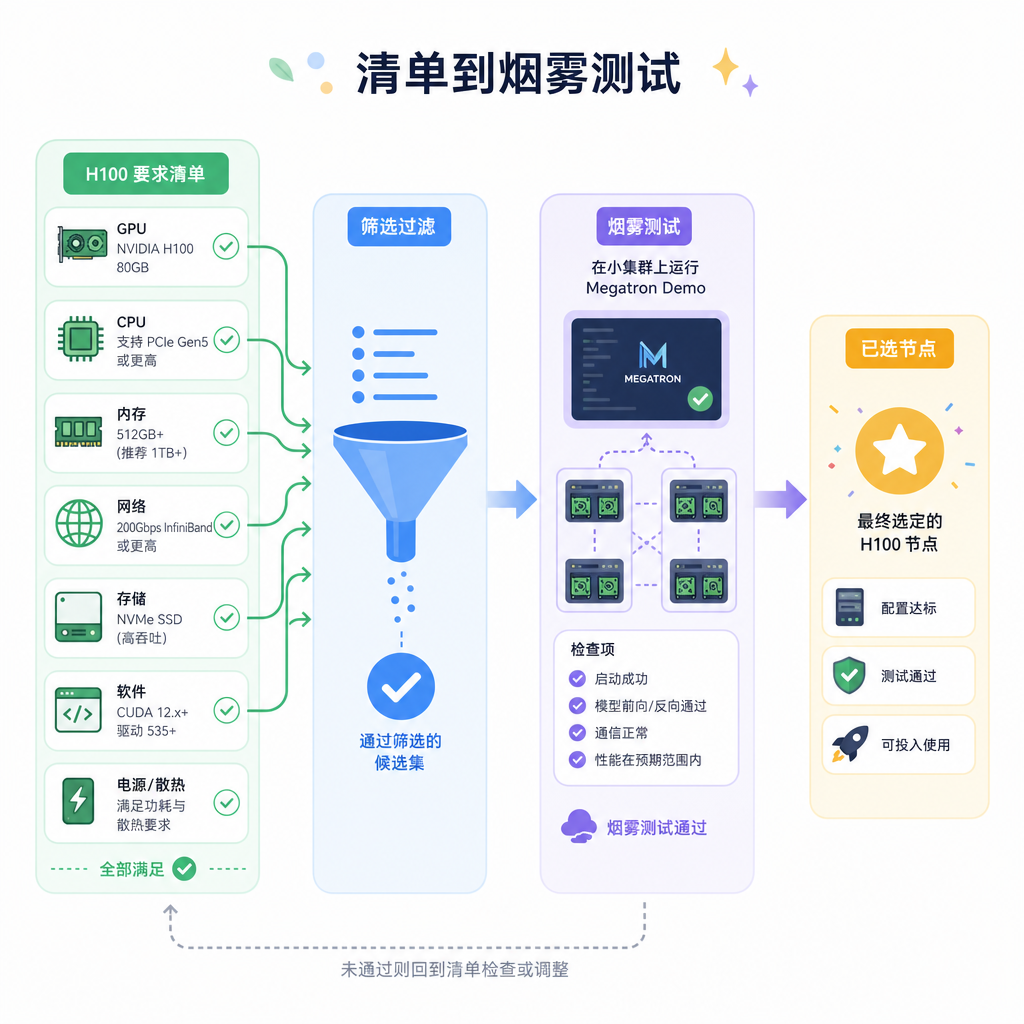
We finally locked an option meeting all hard requirements at a price near the median. NexGpu helped here significantly—it let us filter nodes directly per the checklist, supports on-demand start/stop and rapid scaling, without integrating multiple APIs. After tests passed, we switched to 8 cards, with dashboards monitoring utilization, network throughput, and billing in real-time.
Post-Launch Adjustments and Results
On the first official run day, utilization was only around 60%. We found a bottleneck in the data loading pipeline. We immediately added local caching and prefetching, pushing utilization above 85%. Mid-way, we needed to add 4 cards temporarily for ablation experiments. With NexGpu, expansion took minutes, seamlessly integrating tasks without re-queueing.
Over two weeks, total spend came in about 25% lower than the initial “cheapest” option—because there were no wasted trial-and-error costs or hidden fees—and we caught up on schedule. Key model metrics hit targets, and multi-turn agent loop latency dropped to acceptable levels. More importantly, the team now has a reusable GPU selection SOP: checklist → multi-source quotes → smoke tests → monitor and scale.
July's dispersion data is a reminder—the GPU rental market is still in an OTC stage, far from standardization. Cheap doesn't mean usable; expensive doesn't guarantee value. By breaking needs down to an operational level and leveraging flexible platforms, small and medium teams can deliver steadily amid volatility.


Comments(0)